
Ubud’s Temples, Monkeys, and Rice Terraces

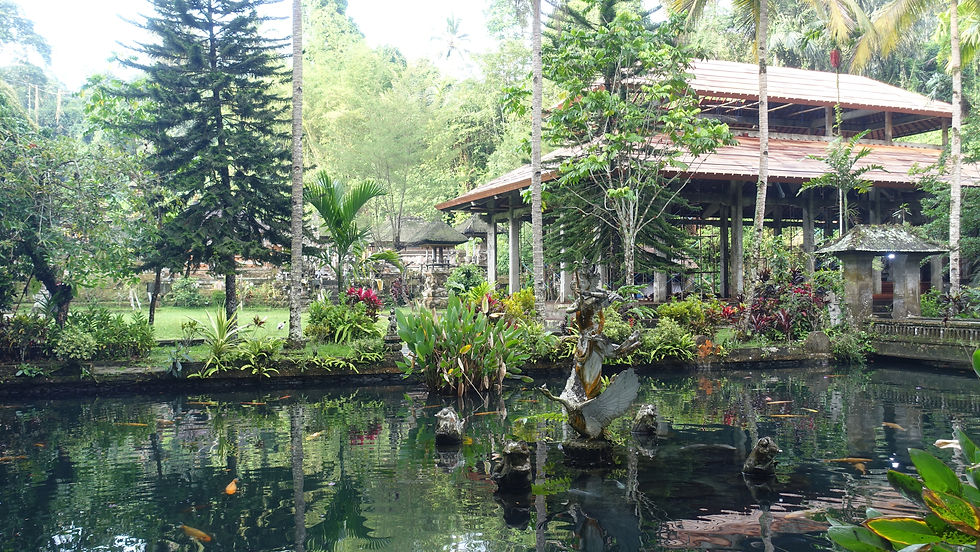
On Tuesday, our hired local driver—who doesn’t speak much English—picks us up in Medewi, and we set off on a grand exploration of Bali. Our first stop is Ubud, the town made famous by the film Eat. Pray. Love and now very popular among tourists. There we visit the Hindu temple Pura Taman Saraswati, also known as the Ubud Water Palace. It isn’t a very old temple—it was completed in 1952 at the request of the Prince of Ubud, I Gusti Nyoman Lempad. Nevertheless, it is one of Ubud’s main tourist attractions thanks to the picturesque beauty of the temple and its ponds.
We stroll around Ubud and photograph other temples as well—the entire town feels decorated. The street scene in Ubud goes something like this: hotel, restaurant, temple, hotel, restaurant, temple, and so on. Unlike our previous destinations, there seem to be more tourists on the streets than locals.
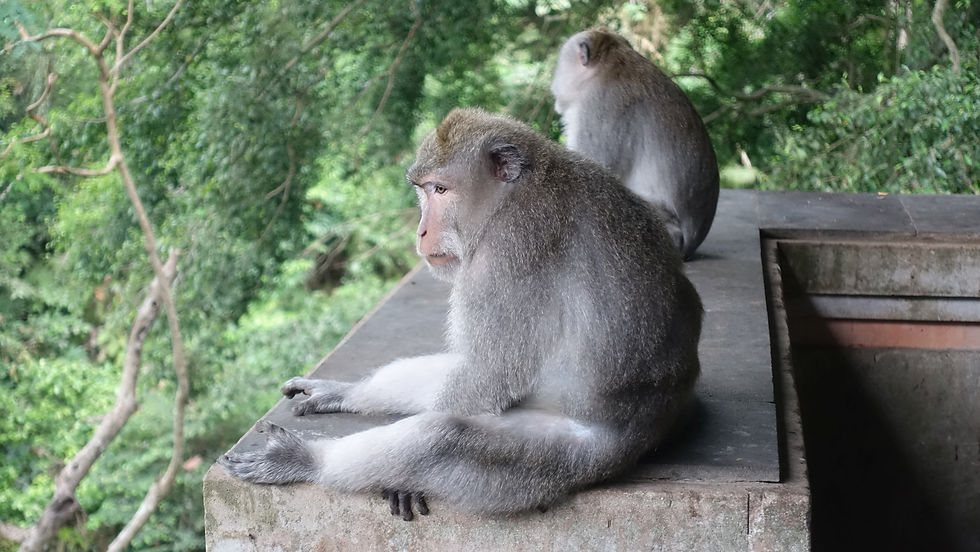
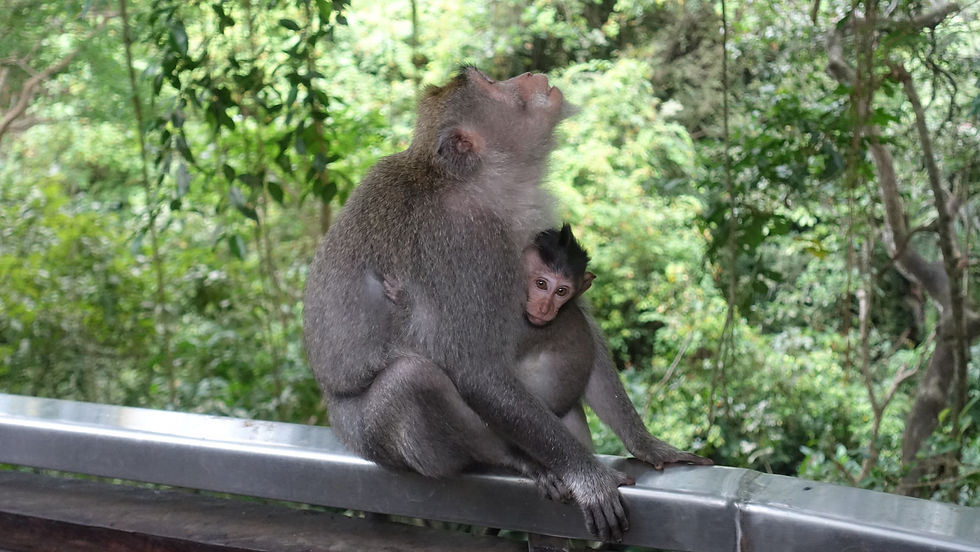
Next, we head to the Ubud Monkey Forest, officially known as Mandala Suci Wenara Wana. This is a protected area that contains three Hindu temples, all built around 1350, and over 1,200 long-tailed macaques. The sanctuary was established in the 1930s to protect the macaques. Here, you can observe their social lives up close and, if you wish, even have your photo taken with them.
However, these are not harmless animals. Bringing food inside is forbidden, and visitors are warned that if provoked, the monkeys may attack. As we walk around, we see one macaque sitting in the middle of the path trying to dismantle a spray paint can, apparently hoping to find something edible inside. As I approach, I say, “No, monkey!” and make a small motion with my foot to shoo him away from the can. In response, he bares his teeth at me and makes a hissing sound. After my strategic retreat, the little monkey calmly continues working on the spray can as if nothing had happened.
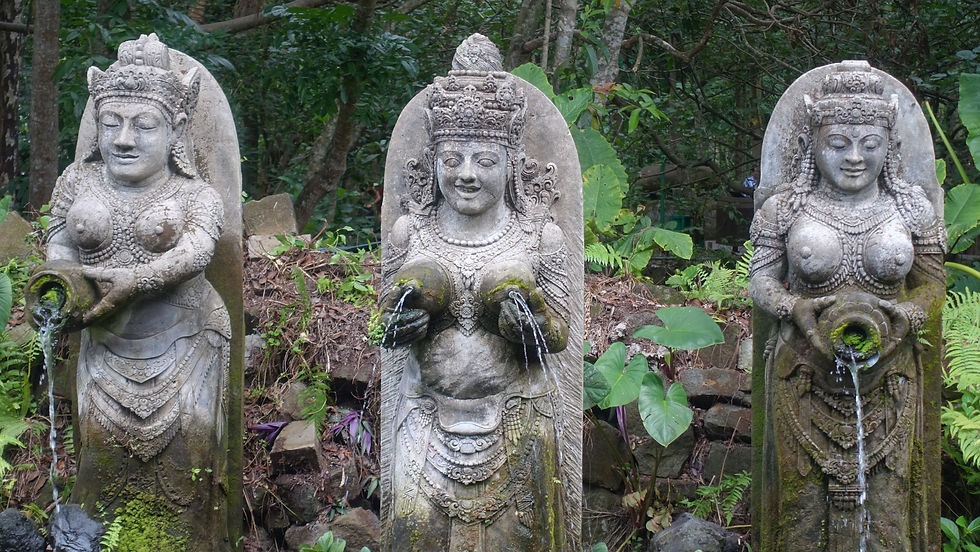
Our next destination is Pura Gunung Kawi, one of Bali’s oldest temples. It was built in 1080 at the request of King Anak Wungsu to honor his father Udayana and the Warmadewa dynasty. This is one of the temples with purification pools and fountains, where, by praying and submerging your head under the water, you can wash away negative energy and receive positive energy. As we later discover, there are separate pools for men and women.
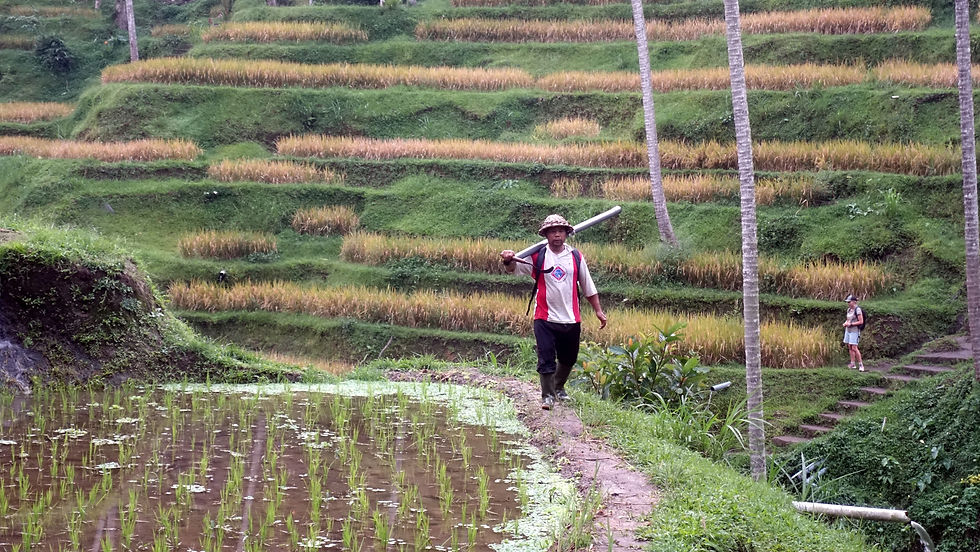
The final attraction we visit near Ubud is the Tegalalang rice terraces. The rice terraces, together with the water temples, are listed as a UNESCO World Heritage Site. In the 11th century, irrigation systems were established in Bali, where water flowed from springs first to the temples and then to the rice terraces. This created a cooperative system in which water was distributed among farmers according to the needs of their rice fields. This system is still functioning today.
In Tegalalang, however, the terraces have become a real tourist trap. Visitors can have their photos taken against the backdrop of the rice terraces in decorative nests or on swings. For an extra fee, women are even provided with special flowing red dresses for photos. You can also pay to zip-line across the valley. Those who don’t want to spend money can simply photograph other tourists posing in heart-shaped or bird’s-nest seats.
On the way to our next stop—the small town of Sanur—we witness (or rather, are forced to wait in the car until it passes) a Hindu religious procession taking place on the street near a temple. From what we understand from our driver, such ceremonies take place every day.
When we finally arrive in Sanur in the evening, we immediately notice that it’s a completely different kind of place compared to our previous stop, Medewi. Restaurants everywhere feature live music, there are many luxurious massage salons and expensive hotels, and one of the few affordable eateries is packed with tourists. We learn that Sanur is one of Bali’s oldest tourist areas and has developed into a resort catering mainly to wealthier visitors. We chose it simply because the speedboat to Nusa Penida departs from this beach in the morning. We also visit a large supermarket, where I don’t buy any fresh durian fruit—but I do purchase durian chocolate to bring back to Estonia.










Comments