
Hue’s “Forbidden City”

Our day in Hue begins practically — with a visit to the bus station to buy our onward tickets. From there, we walk back along the riverbank toward the bridge, taking in the calm atmosphere of the Perfume River.
As in many Vietnamese cities, communist propaganda posters are prominently displayed around town — colorful, confident, and ideologically unmistakable. They form a striking backdrop to daily life.
We cross a large bridge, with mountains visible in the distance and boats moving steadily along the river below. Soon after, we pass over the old citadel’s moat and enter the historic heart of Hue.
Inside the former imperial capital, reminders of more recent history appear as well: captured U.S. military equipment displayed as war trophies from the Vietnam War. A sobering contrast to the elegance of the imperial architecture.
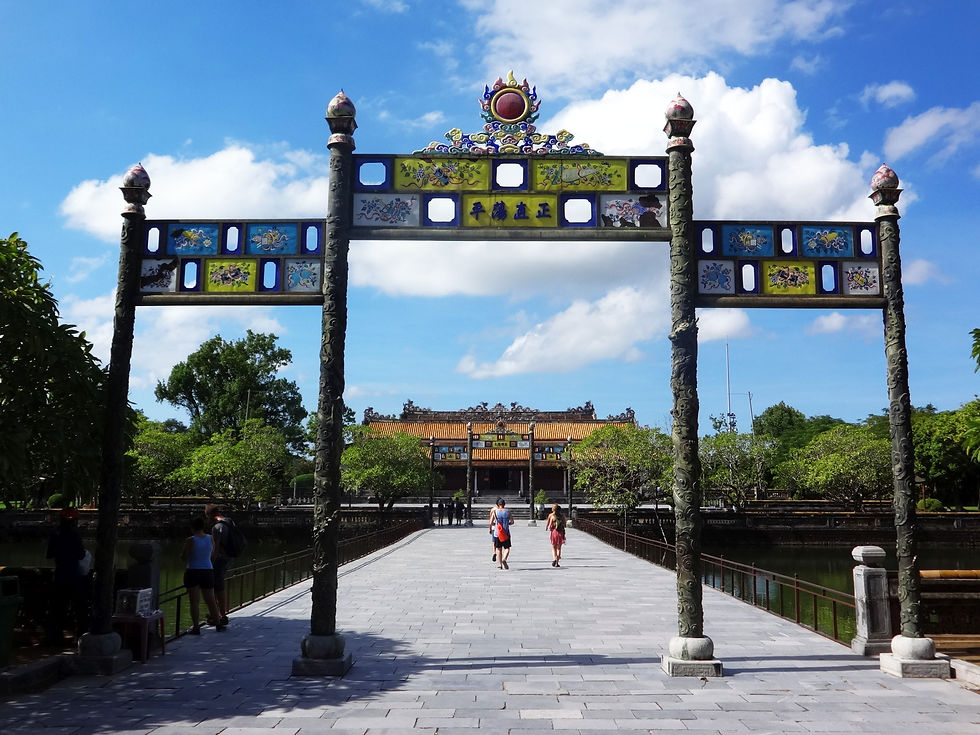
Then we step through what looks like an ordinary window — but it marks our entrance into Hue’s “Forbidden City,” the Imperial Citadel. Construction of the imperial complex began in 1804, heavily influenced by both Vietnamese tradition and certain European architectural elements. Hue served as Vietnam’s capital from 1802 until 1945.
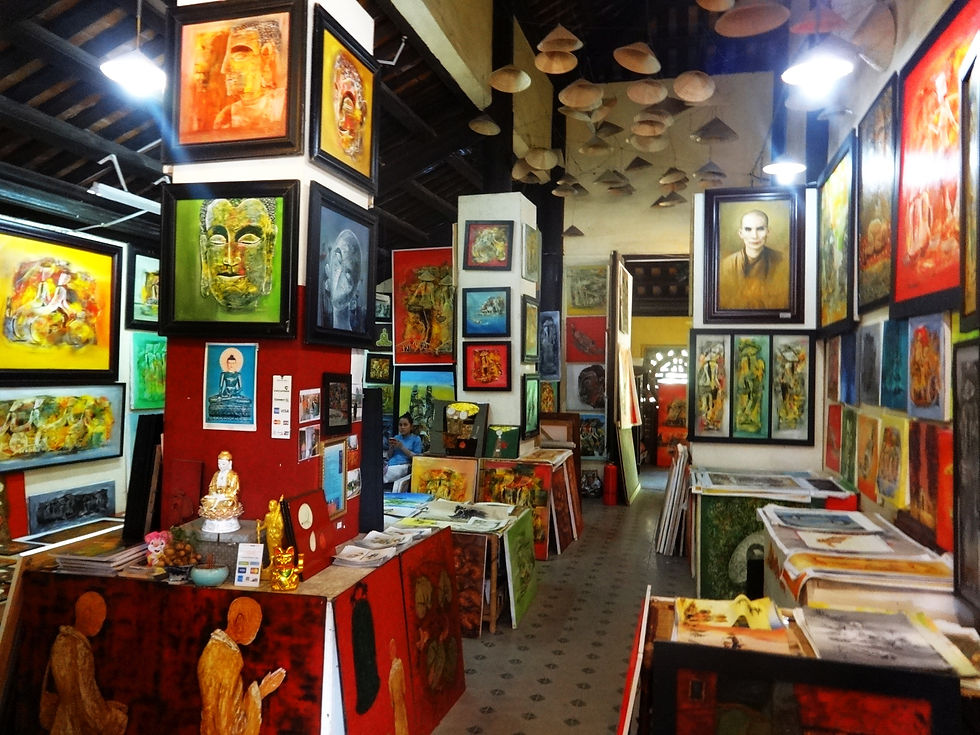
The complex is vast. Courtyards, gates, temples, and pavilions stretch across a large area. Local art is sold in small stalls, and Buddhist imagery adds spiritual depth to the surroundings. The Imperial Theater stands out as the most impressive building within the citadel — richly decorated and historically significant.
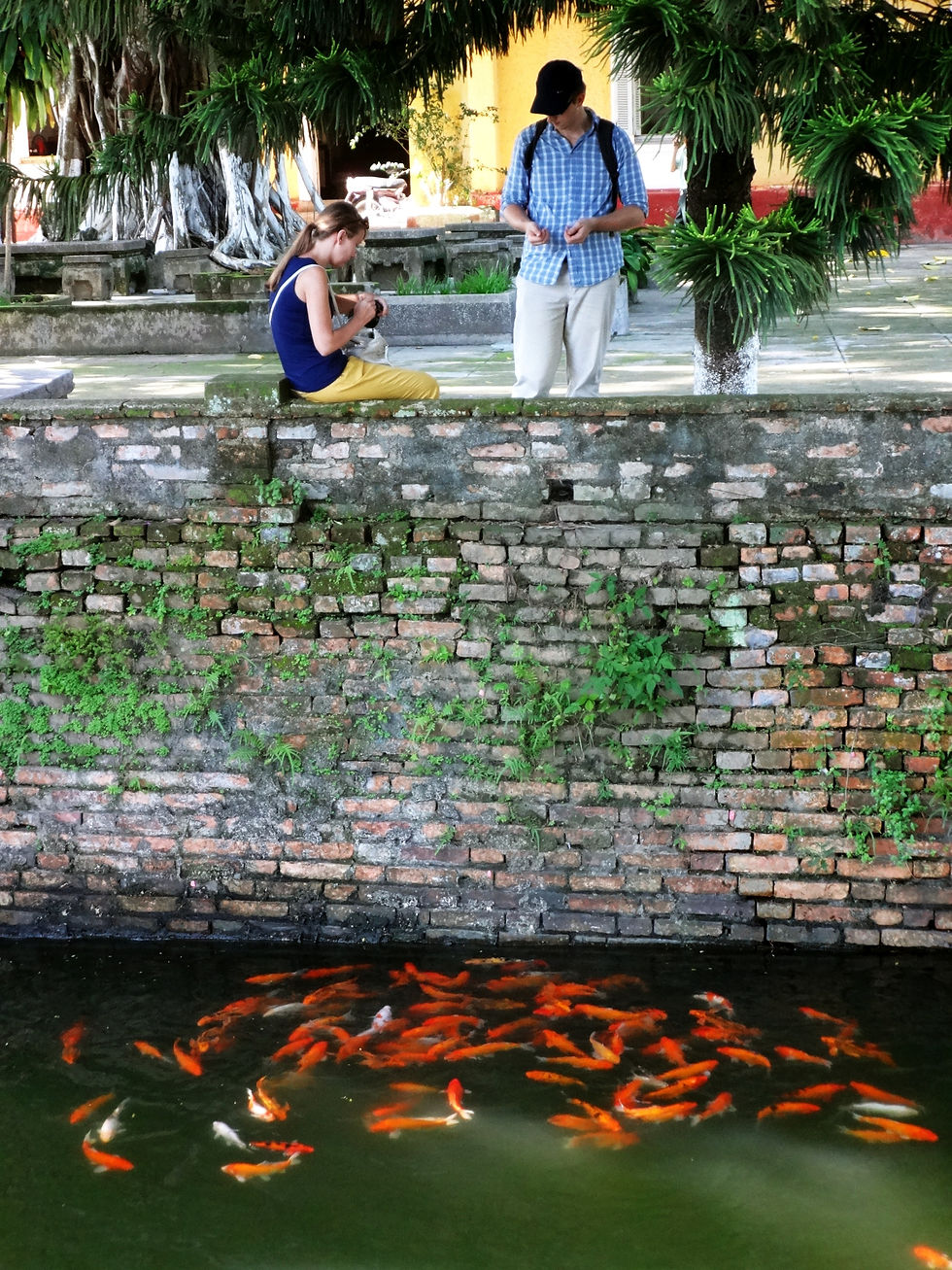
In the imperial gardens, flowers bloom peacefully, and ponds invite visitors to feed the fish. For a moment, everything feels serene.
Yet Hue carries scars. The city suffered heavily during the Vietnam War, particularly in one of its bloodiest battles. Many historic structures were damaged or destroyed, and the marks of that conflict still linger in parts of the complex.
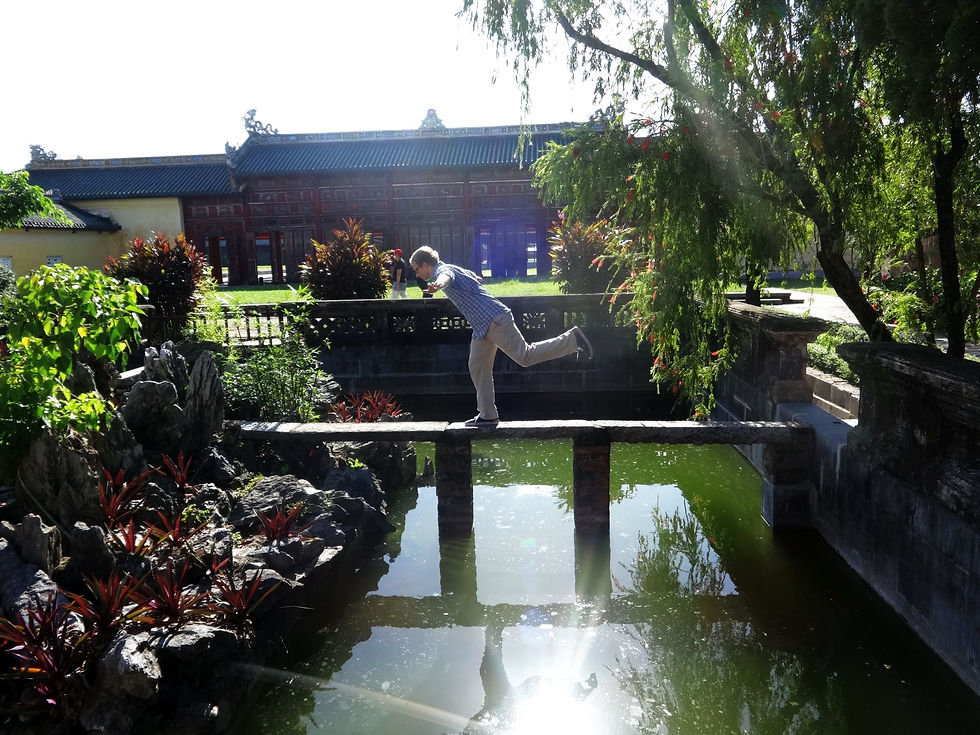
At one point, Marek — true to form — starts performing his usual antics. Eventually, after Marek and I begin singing for fun, Kristina delivers what may become one of the most memorable lines of the trip. Turning to Marek, she says:“What happened? You used to be so nice!?”
As we leave the citadel, we see young locals playing football — life moving forward, as it always does.
Hue is a place where imperial grandeur, war history, ideology, and everyday life all intersect. A former capital carrying both pride and pain — and still very much alive.









Comments