
Etosha Safari, Hungry Children, and a Deadly Elephant

On Monday, we get up before sunrise and drive to the gate of Etosha National Park, where our guide Amon is waiting for us with a safari vehicle. We set off together with a group of Germans. It turns out they all studied medicine together and have come to Namibia for the wedding of a friend who is marrying a local white Namibian man. As part of the trip, they are traveling around the country.
The doctor sitting next to me is half Indonesian and half German. During the tour, which lasts until 4 PM, we discuss German, European, and global politics, the healthcare system, and many other topics. During a short break, I even briefly see their friend who is getting married, as she passes by in another safari vehicle.
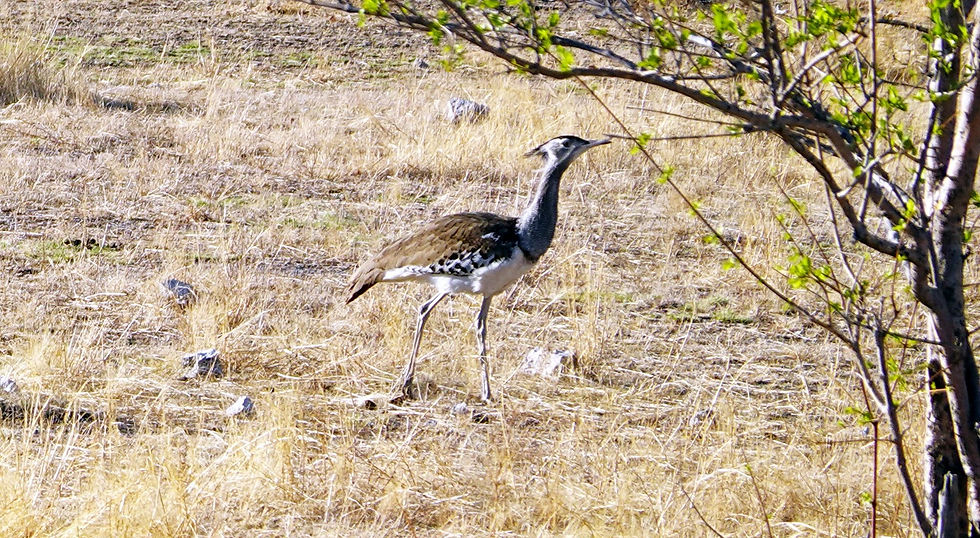
Already in the morning, we spot a pride of lions lazily lying by the roadside. Disturbed by the noise of safari vehicles and the attention of tourists, they slowly walk a bit farther from the road one by one and then flop down again. The weather is quite hot, so their low activity level is understandable. Throughout the day, we also see zebras, giraffes, ostriches, wildebeest, oryx, jackals, various antelopes, and birds.
The animals we search for the longest but fail to find are elephants. We also don’t see any rhinos.
At the end of the safari, we are dropped back at the Etosha gate. A number of Himba women are there selling handmade souvenirs, while their children run around nearby. I buy a small souvenir from several of them. The children ask for something to eat. I give them some of the food supplies we had bought for long drives, which they accept with great enthusiasm, gratitude, and occasionally a bit of competition among themselves — even canned food and cornflakes. At one point, one of them even grabs an empty snack wrapper from the inside pocket of the car door, hoping there might still be something inside. Judging by their appearance, the children do not seem particularly well-nourished.
We drive back to our accommodation in the Okutala private game reserve. From the hilltop near our cabin, we can see a group of rhinos in the distance on the savannah.
As we sit down for dinner at sunset and mention to the managers that we didn’t see any elephants, one suddenly emerges from between the trees in the distance. The couple managing the lodge tell us that it is a very aggressive elephant that has already killed two rhinos — breaking the back of one and driving another onto a fence. Because of this elephant, visitors are no longer allowed to hike through the park on foot. In the past, poachers have also entered the reserve to hunt rhinos.
During the COVID period, when visitor numbers dropped sharply, the owner of the private reserve had to decide where to cut costs. He chose to focus on non-predatory animals, while some other parks decided instead to invest more in predators. The owner is said to be a wealthy businessman who also owns another private reserve and additional businesses.
The dignified older white couple managing the place had moved here from South Africa, as one of them was originally born in Namibia. They told us that life in Namibia is significantly safer than in South Africa and that there is not the same level of racism here. They are very friendly and take the time to speak with every guest. They truly make us feel welcome, and we decide to extend our stay by one more day simply to relax.




Comments