
Spitzkoppe Mountain, a Bushmen Village, and a Party at a Car Wash

Updated: Feb 22
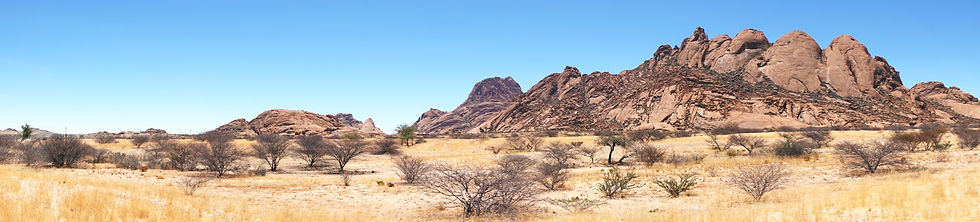
On Saturday, we hand over our apartment in Swakopmund and drive 160 km to Spitzkoppe, a mountain often called the “Matterhorn of Namibia” because of its sharp peak. All around the area, locals sell stones and pieces of wood at small roadside stalls, apparently aimed at hikers. What exactly one is supposed to do with those stones, we don’t know — and we don’t investigate further.
We then drive another 90 km to a place called the San Living Museum, located inside a private nature reserve. The owner of the reserve has brought an entire village of San people — also known as Bushmen — from far in the north to live there. They now reside in a purpose-built village and introduce tourists to their traditions and way of life.
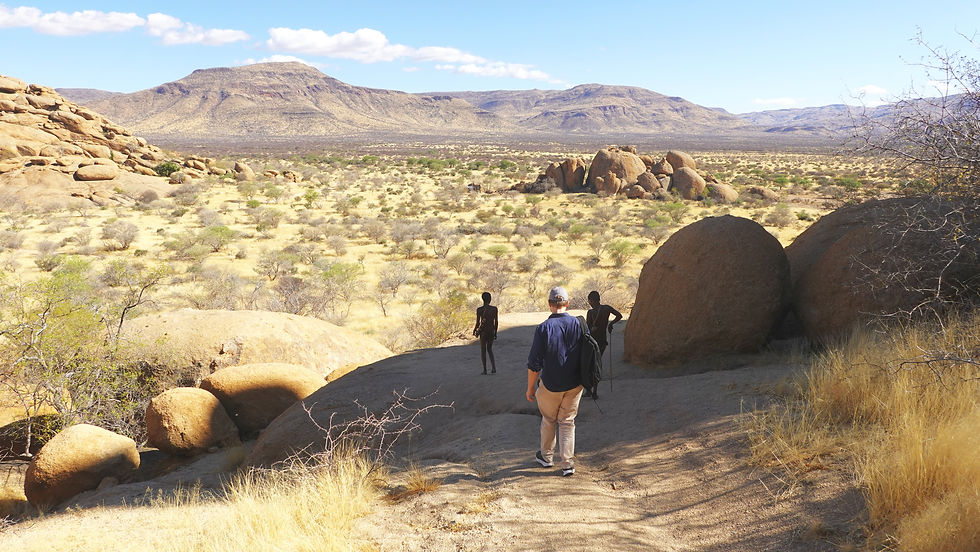
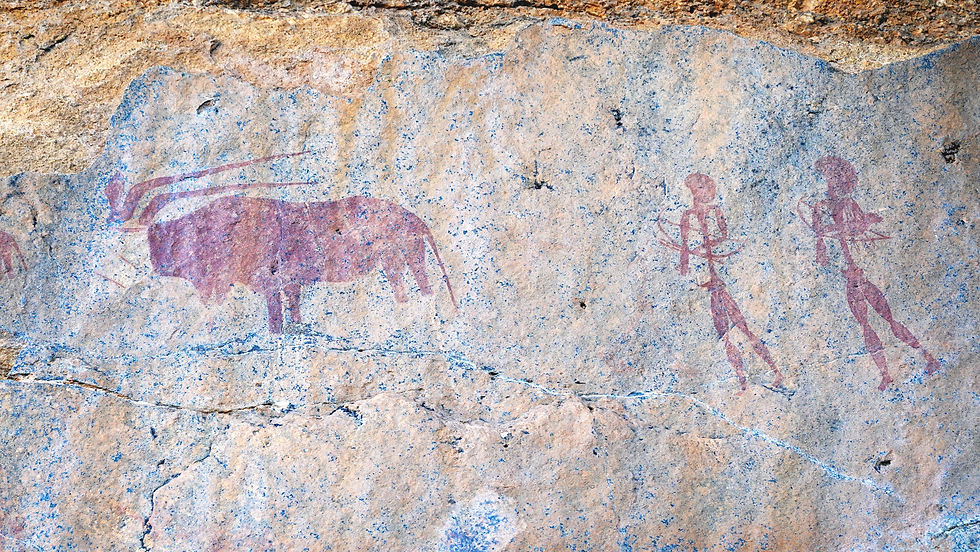
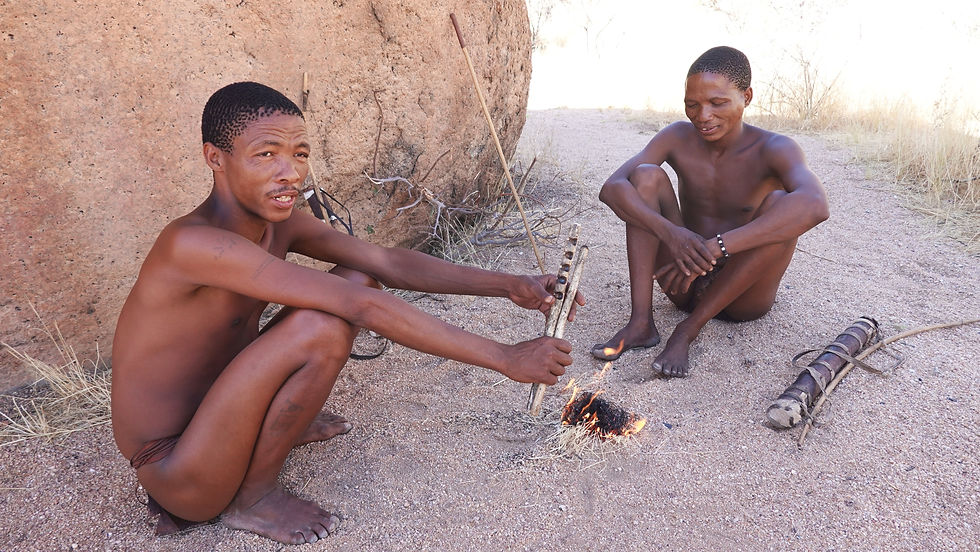
Traditionally, the Bushmen are nomadic, moving from place to place and building temporary huts from grass. Two short-statured San hunters guide us around the nearby area, showing how they set traps, make fire using wooden sticks, and craft weapons from natural materials. They even stage a mock hunt for us. The women demonstrate how they create beautiful jewelry and handbags from seeds and other available materials. Afterwards, all the men and women of the village — along with a few children — perform two traditional dances. The entire presentation is just for us; there are no other white visitors present.
Afterwards, we have the opportunity to buy the handmade crafts produced by the women. We are told that all the money earned goes to the landowner, who then takes care of them and pays them a monthly sum. Each craft item has the name of its maker attached, which is removed when purchased — so hopefully the individual creators receive some additional compensation.
We then drive 50 km to our accommodation, Little Bush Guesthouse, run by a Swiss man who has married a local woman. It is located in the small town of Omaruru, which has about 14,000 inhabitants. For comparison, Swakopmund has 25,000 residents and the capital, Windhoek, 486,000.
As we walk to a restaurant recommended by our hosts, two large Black women ask us in English whether we would like women. Since this could be interpreted in more than one way, they quickly clarify: as wives. We reply that we would prefer food instead. They wish us a good evening.
After dinner, we walk back to “Little Bush Guesthouse,” leave all our valuables behind, and drive to a local party spot in Omaruru that operates during the day as a restaurant and car wash. Its name is “Reiterverein Sport Bar & Car Wash & Takeaway.”
When we walk in, we immediately notice that there isn’t a single white person there. The bartender asks us rather bluntly, “What do you want here?” We reply that we were thinking of having a couple of drinks. He immediately softens and asks what we would like to drink. We sit down and observe the crowd around us chatting, drinking, smoking hookah, and dancing. People look back at us — white visitors are probably not a common sight here.
At some point, a few locals come over to talk to us. We learn who they are:
Maria — She has just finished her second year studying psychology at a university in the capital. Her holiday began two days ago and lasts until January, so she has returned to her parents’ home village for the break.
Anna — Maria’s friend, who doesn’t say very much.
John — An electrician at a nearby uranium mine. He studied at a vocational school for four years. He says life is generally good, but Namibia is more sparsely populated and therefore more expensive than other African countries. He has traveled to South Africa, Angola, Kenya, Tanzania, and Germany.
Marten — He arrived from South Africa a week ago to work in Namibia after an international company headquartered in Mauritius opened a new laboratory here. He studied chemistry for four years.
At some point, we decide it’s time to leave. We say goodbye to John and Marten and head outside. There, Maria and Anna — who had gone to the restroom earlier — approach us and ask whether we had planned to leave without saying goodbye to them. I reassure them that we knew we would meet them by the exit.
Another local young woman, who had simply been dancing and sitting near us inside, also comes out to talk and asks whether we really have to leave already. We confirm that we do, since we need to start driving early the next day. She too says goodbye somewhat sadly.
We get into the car, drive back, and go to sleep.









Comments